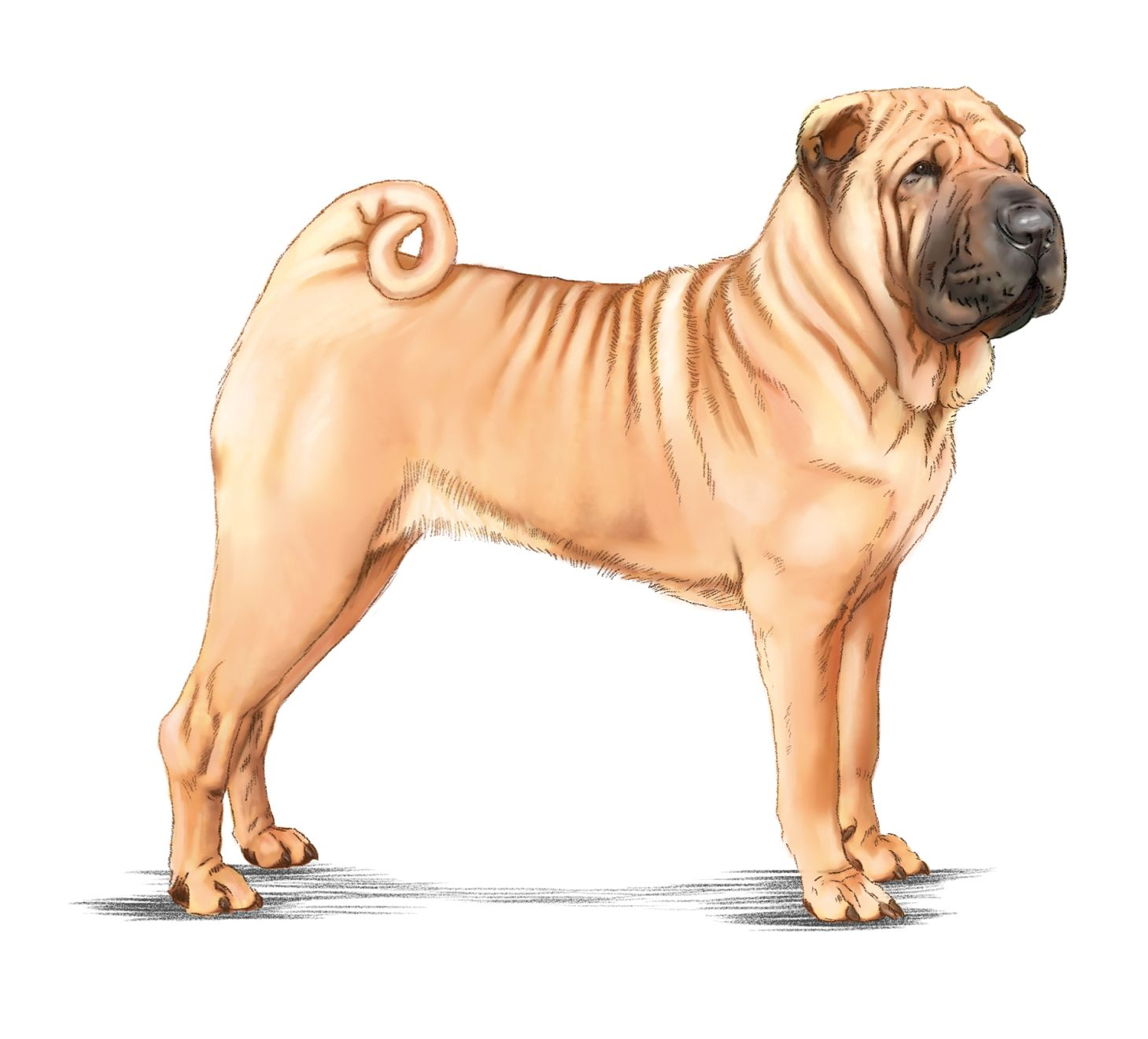
| Hane | Hona |
|---|---|
| Höjd | Höjd |
| 44 - 51 cm | 44 - 51 cm |
| Vikt | Vikt |
| 20 - 27 kg | 20 - 27 kg |
| Vuxen ålder | |
|---|---|
| 1 to 7 years | |
| Mogen ålder | Äldre |
| 7 to 10 years | From 10 years |
| Babyålder | |
| Birth to 2 months | |
Get to know the Chinese Shar-Pei
All you need to know about the breed
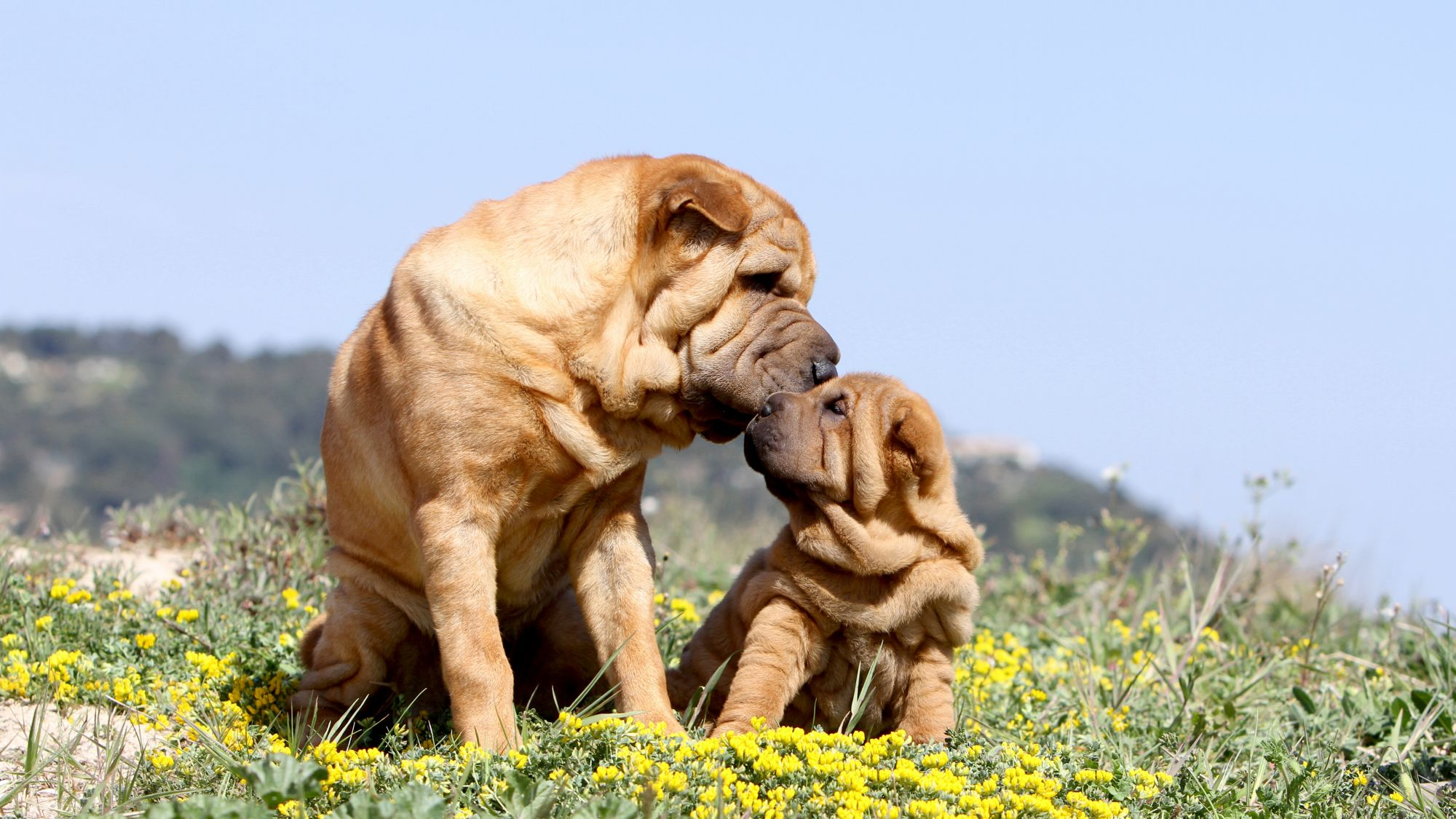
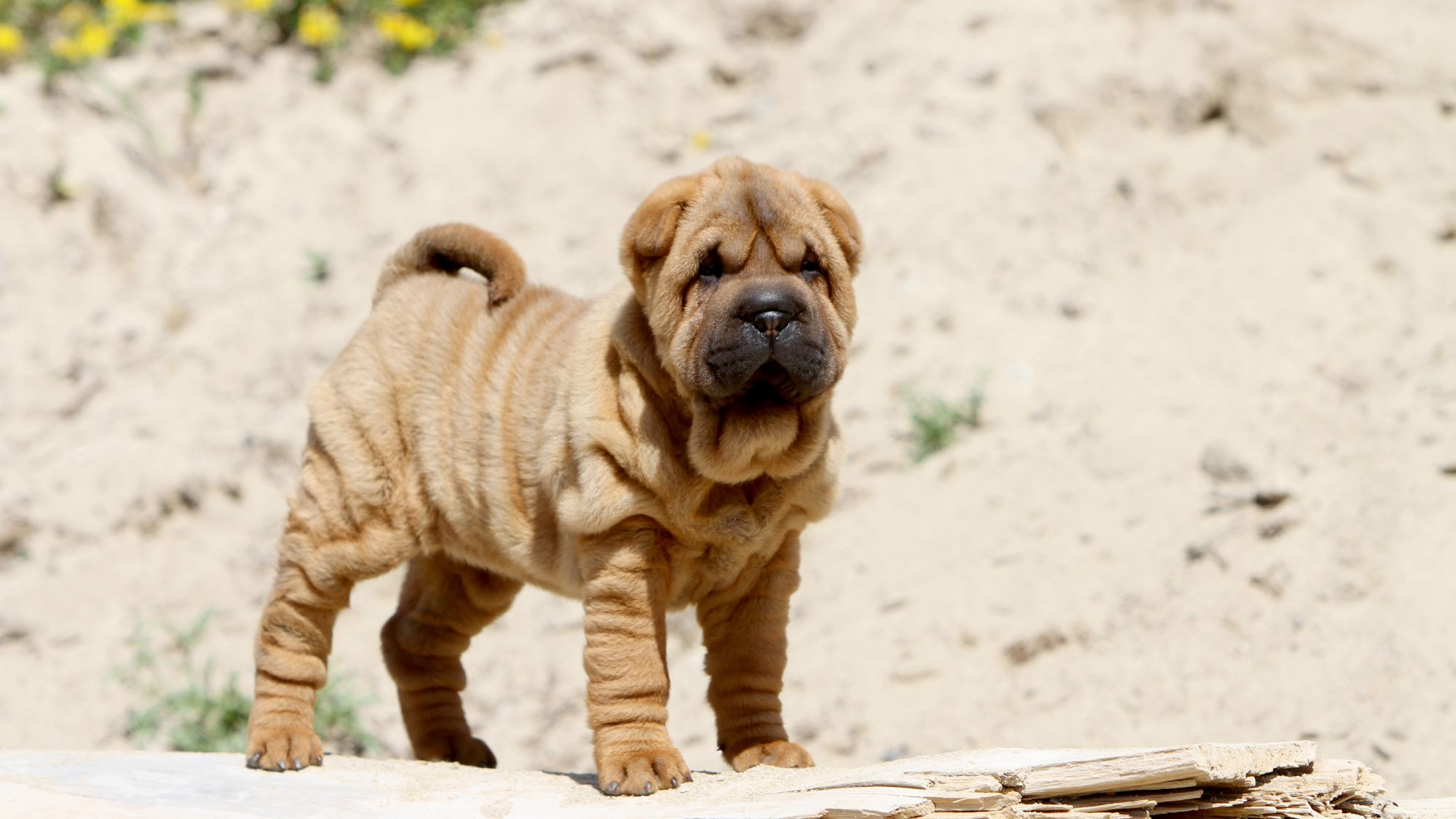
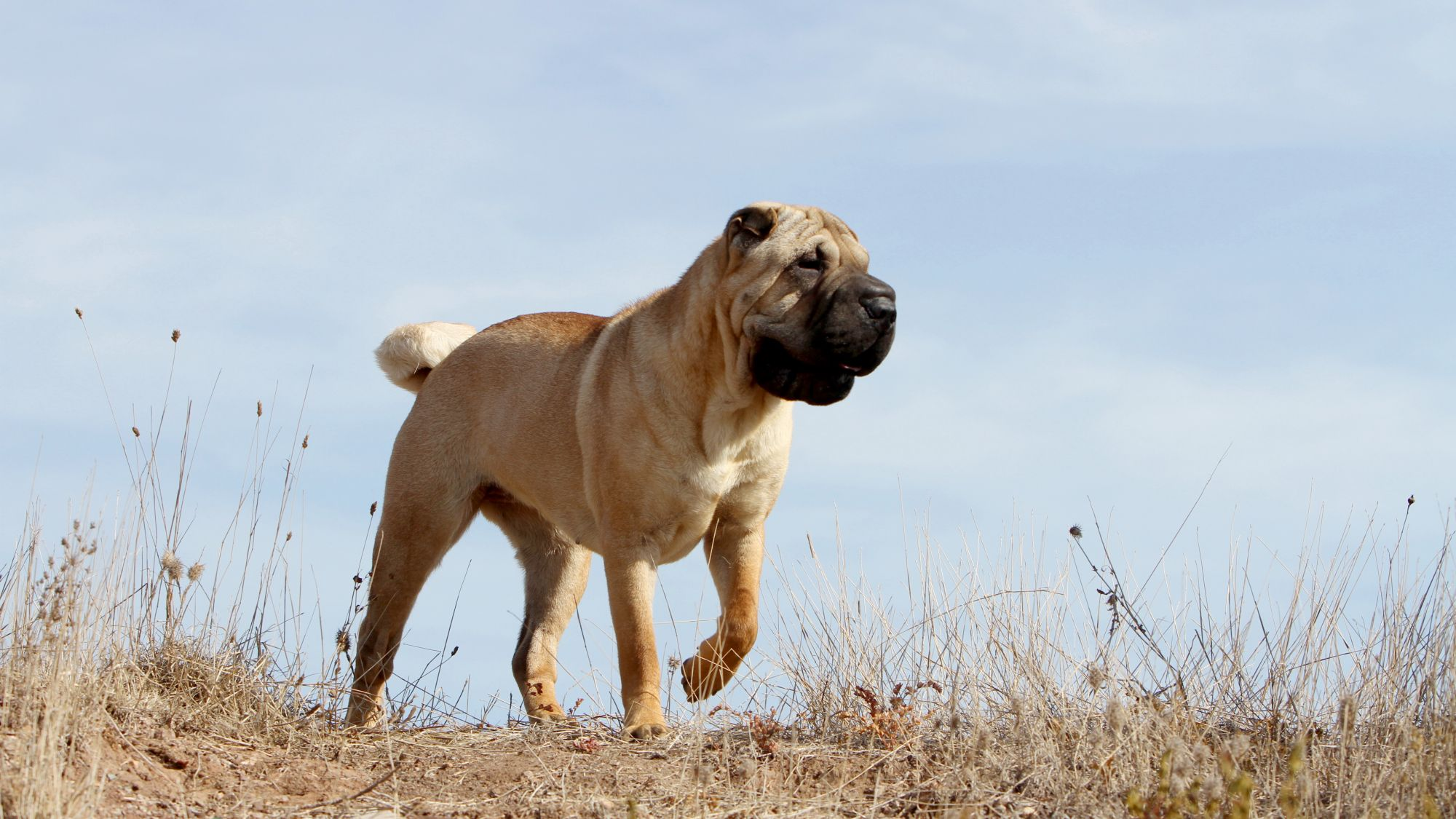
No discussion of the delightful Chinese Shar-Pei would be complete without bringing up the breed’s famed deep wrinkles, folds, and suit-two-sizes-too-big loose skin. Chinese Shar-Pei puppies are one of the most adorable sights on Earth, though they do outgrow – or grow into – their skin as they get bigger. Let’s not forget their remarkable dark, blue-black tongue, either.
In an amazing feat of adjectives, the Chinese breed standard states the Chinese Shar-Pei has clam-shell ears, butterfly nose, melon-shaped head, grandmotherly face, water buffalo neck, horse's buttocks and dragon's legs. Far be it for us to contradict such an extraordinary description of a most wonderful dog.
Chinese Shar-Peis are a very old breed (though that’s not the reason for the wrinkles), initially bred to hunt, guard and herd. As such, they are renowned protectors of home and loved ones. However, while they can be tolerant of children, it is important to discern when a Chinese Shar-Pei is being playful and when they are showing their more dominant side, a distinction a younger child can’t necessarily make.
Kind and loyal, Chinese Shar-Peis also have very strong characters, a bit of a stubborn streak, and definitely require experienced owners who are familiar with the breed and training of this type of dog. You will need to establish leadership early on; the Chinese Shar-Pei might not respect the owner who doesn't do so.
However, for the right owner, the Chinese Shar-Pei is a delight, an affectionate, independent dog with a one-of-a-kind personality.
2 facts about Chinese Shar-Peis
History of the breed
While the Chinese Shar-Pei’s evolution spurs much debate among historians, the breed resembles statuettes of dogs found in China dating back to the Han Dynasty (202 BC to 220 AD). Some believe the modern breed descends from these ancient dogs, along with the Chow Chow (the Chinese Shar-Pei’s closest canine relative).
Fast forward to the 19th century, when Western voyagers witnessed the Chinese Shar-Pei being used by locals for dog fighting, unimaginatively dubbing them Chinese Fighting Dogs. At that time, they had less wrinkles and folds than the breed we know now.
In any case, by the 20th century, China’s political situation led to the near-extinction of the Chinese Shar-Pei by the 1970s. In 1978, the Guiness Book of World Records named the Chinese Shar-Pei as the world’s rarest breed, with only 60 remaining. Chinese Shar-Pei lovers owe a huge debt of gratitude to Hong Kong businessman and breeder, Matgo Law. It is thanks to him that the modern-day Chinese Shar-Pei was saved. He made noise, insisting the rest of the world step in, even enlisting the American Kennel Club (AKC). The resulting attention led to increased demand for the Chinese Shar-Pei from overseas. By 1985, around 350 Chinese Shar-Peis were registered with the UK Kennel Club, with AKC recognition coming in 1992.
In addition, Matgo Law’s Chinese Shar-Pei, “Down-Homes Sweet-Pea”, is an ancestor of practically every Chinese Shar-Pei that exists today.
From head to tail
Physical characteristics of Chinese Shar-Peis
.
.
.
.
.
Things to look out for
From specific breed traits to a general health overview, here are some interesting facts about your Chinese Shar-Pei
Caring for your Chinese Shar-Pei
Grooming, training and exercise tips
Chinese Shar-Peis are known to be one of the cleanest breeds around, noticeably absent of any canine odours and keeping themselves well-groomed. However, your Chinese Shar-Pei will still need a little human-provided grooming to keep them healthy and looking their best! A once-a-week brush-through will evenly distribute natural oils and remove any debris. Nails should be trimmed and ears cleaned weekly. Bathe only when necessary.
When it comes to exercise, Chinese Shar-Peis are pretty low-maintenance. An hour or so a day should suffice, though your dog will gladly accompany you on longer walks, hikes or adventures. The Chinese Shar-Pei, originally bred to hunt and herd, still retains a strong prey drive—keep them on the lead or they’ll head off at the first whiff of something interesting.
Training a Chinese Shar-Pei is a more complicated endeavour. First-time dog owners need not apply, sorry. Smart, willing, sure, but Chinese Shar-Peis can also be headstrong and challenging to any owner that has not shown themselves to be the pack leader (though forceful methods will not yield results). Ideally, you will honour your dog’s independent nature while still instilling rules. Many Chinese Shar-Peis are not friendly towards dogs they don’t know – aggressive, even – so early, consistent training is key. Socialisation and puppy training classes when your Chinese Shar-Pei is young are almost a mandatory for a well-adjusted, obedient pet.
7/7
All about Chinese Shar-Peis
Suggested Breeds
Read more on this topic
Dela den här sidan