How to crate train your puppy
Puppies don't naturally like being on their own and this can lead to anxiety and destructive behaviour. Crate training helps your puppy to feel at home, even when you're not there.
Why is crate training important?
When left alone puppies can experience frustration, anxiety and fear, all of which can cause unwanted behaviours. When done well, crate training can reduce these unwanted behaviours and offer your puppy a reassuring and relaxing environment.
What are the benefits of crate training?
There are many good reasons to crate train your puppy:
One
Crate training is a good way to limit your puppy’s access to the house before they learn the house rules
Two
Once comfortable in their crate, your puppy can be safely left overnight, or alone at home
Three
When familiarised with the crate, your puppy no longer feels anxious or abandoned when left on their own
Four
Soiling, chewing and destructive behaviour is reduced
Five
Your puppy has a place all of their own where they feel safe, so they can retreat at any time
Six
You can use the crate to easily transport your puppy to the vets or other places
How to choose a crate?
Crates come in all shapes and sizes. The main thing to remember is that the crate should be large enough for your puppy to stand up and turn around in, now and as an adult.
1/5
Getting used to the crate
- Place the crate in a room where the family often spend time together
- Line it with a soft blanket
- With the door open, slowly introduce your puppy to the crate
- Place a trail of treats leading inside to encourage them to explore
- Alternatively, you can place their favourite toy in the middle of the crate
2/5
Feeding in the crate
- Start feeding your puppy regular meals near the crate
- If your puppy is already happy with the crate, place their dish inside the crate
- If your dog is anxious, start feeding him outside the crate and gradually place his dish further inside, each time
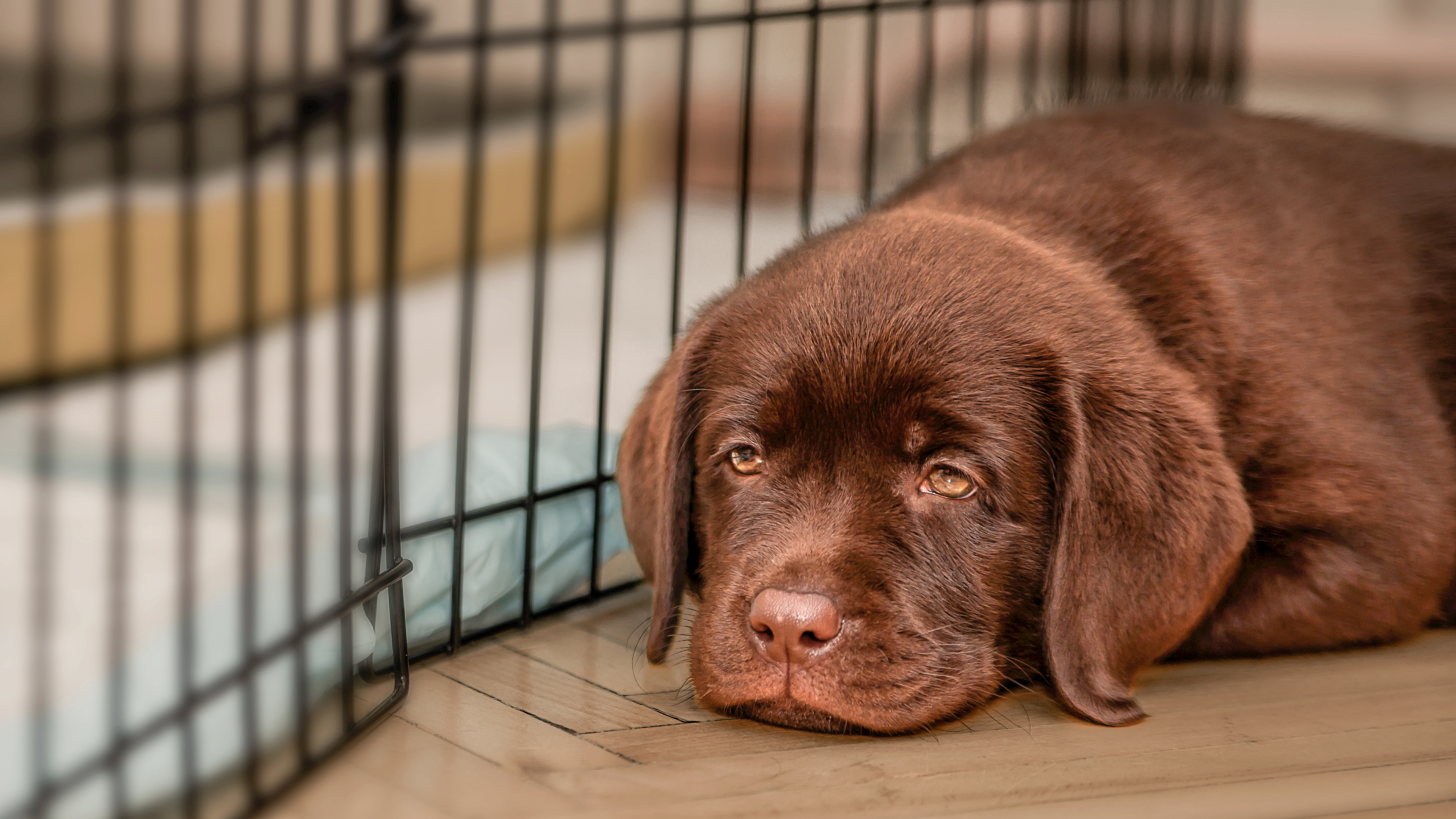
- When you puppy is comfortable eating inside the crate, slowly close the door. Chews or food toys can be great ways to increase meal times in the crate.
- Slowly build up the time the door is closed after each meal
3/5
Sitting in the crate
- When your dog is happy spending time inside the crate, try leaving them for short periods while you are at home
- Call your puppy to the crate and give them a treat
- Give them a command, such as “kennel up” and when they enter the crate praise them and give them another treat
- Provide your puppy with a chew or a toy to engage them. When you are sure they are calm, slowly leave the room
- Slowly increase the amount of time you are away each time until your puppy can be left alone, without whining
4/5
Staying in the crate
- When your puppy is happy to spend 30 mins of more in the crate without becoming anxious you can leave them in the crate when you are away from home
- Always praise your puppy calmly and give them a treat before leaving them in the crate
- Make departures quick and matter-of-fact, not emotional
- When you return don’t respond to your puppy in an excited way – it’s important to make this separation feel normal
- You should not crate your puppy for more than four or five hours per day. The time should be build up gradually, as most puppies will need to urinate at least once in this time
5/5
Sleeping in the crate overnight
- Introduce your puppy to the crate from an early age
- At first move your puppy’s crate near to your bedroom – this stops them from feeling isolated
- If your puppy whines at night, they may need to be let out to go to the toilet
- Praise your puppy when they enter the crate and give them a treat
- When your dog is comfortable with sleeping in their crate you can move it elsewhere in the house