Now, your cat’s first line of defense is you
What if you could unlock your cat's health secrets?
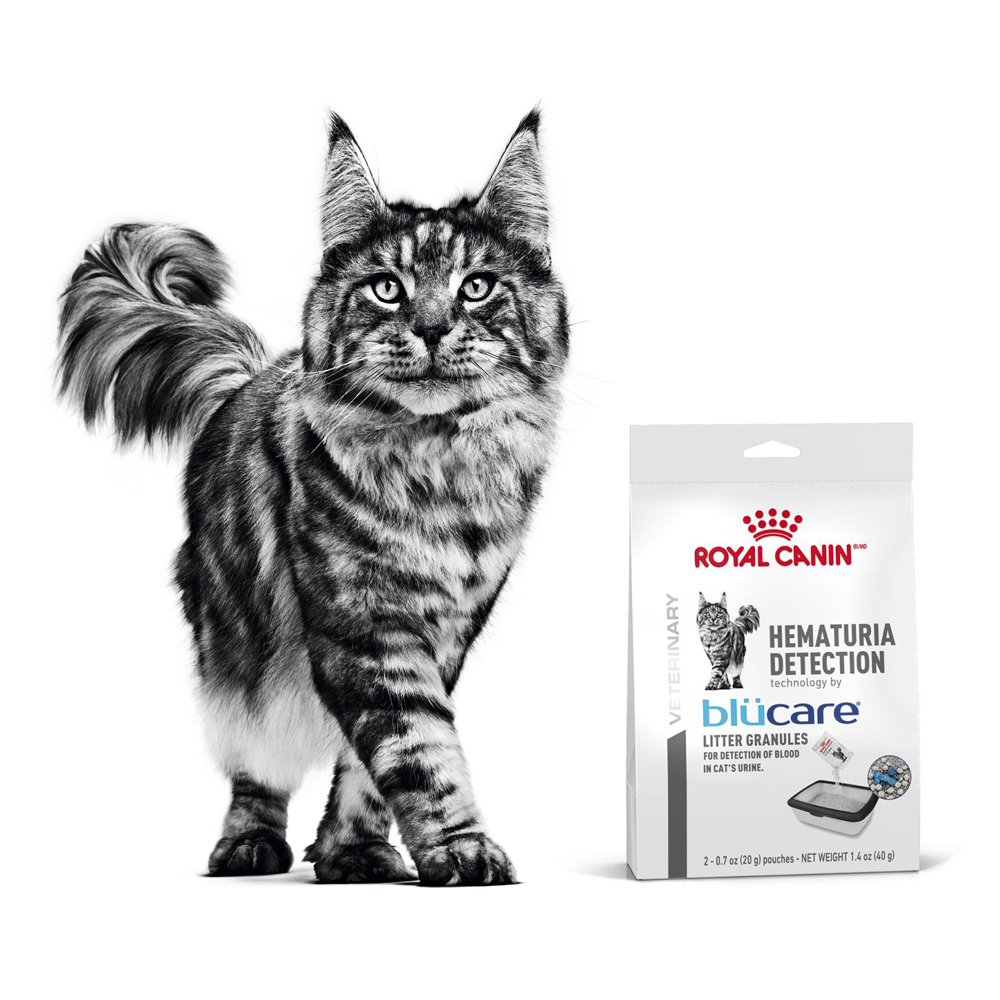
Cats tend to hide disease symptoms and can show few or no early signs of illness. If a medical condition goes unnoticed, treatment options may be limited or your cat may require expensive long-term care. That’s why your vet may prescribe ROYAL CANIN® Hematuria Detection, technology by Blücare – litter granules for detection and on-going monitoring of blood in your cat’s urine.
Most urinary conditions tend to re-occur after one episode —in fact, approximately 50% of cats that experience one episode of feline lower urinary tract disease (FLUTD) will have a recurrence.

Spread
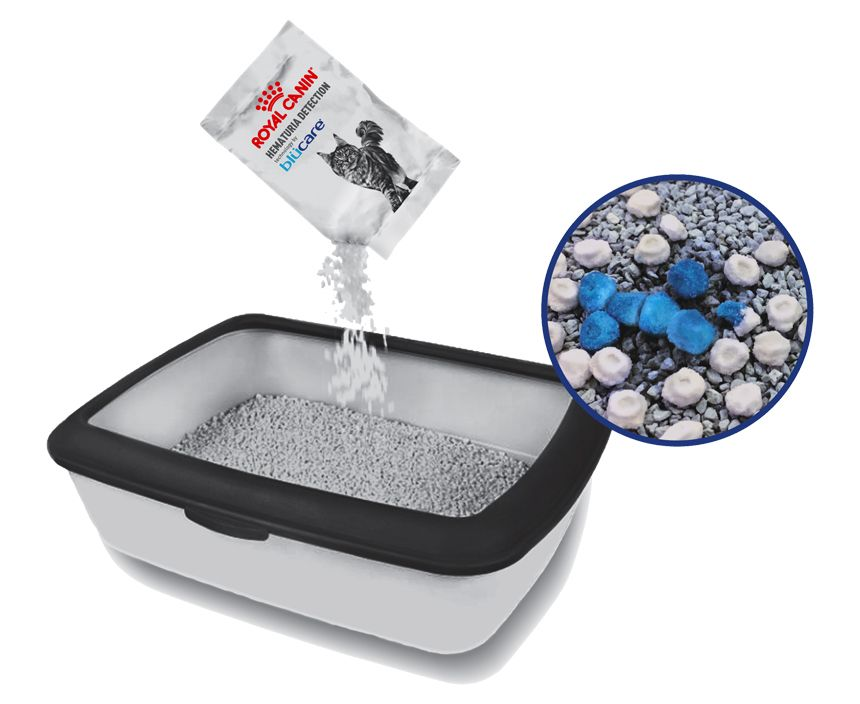
Spread the granules over the litter and wait for your cat to urinate.

Inspect
Inspect the litter box after your cat urinates. If granules are WHITE or YELLOW, the test is negative. If they turn BLUE, the test is positive, as it shows the presence of blood in your cat's urine.

Consult
If the granules have turned BLUE, contact your veterinarian as soon as possible to discuss your cat’s results and what you can do to maintain their health.
Test results may vary based on conditions of use and other factors such as a cat's diet and medication.
Each test has its limitations, false positives, and false negatives. Accuracy of results is not guaranteed.
Benefits of HEMATURIA DETECTION by Blucare
Still have questions?
See below answers to common HEMATURIA DETECTION questions.
How is this different from other tools to monitor your cat's urinary health?
My cat seems fine. Why do i need this?
Cats are secretive animals, and they often hide the clinical signs of disease. Many common conditions, including lower urinary tract conditions, show few or no signs in the early stages that can be identified at home. Haematuria, or more importantly microhaematuria (blood in urine unable to be viewed by the naked eye). This can indicate early disease processes when it is important to consult your veterinarian to support the best care for your cat.
What if I have multiple cats?
First, add the granules to your cats’ shared litter box. If granules turn BLUE, you’ll need to separate your cats so each has their own litter box. You can add granules to each litter box (this will help determine which cat was responsible for the color change), or, if you suspect which cat needs specific monitoring, add the granules to that litter box only.
Where can i buy this product?
Can I use it with any litter?
It can be used with most litters available on the market. For best detection and interpretation of the results, a clay- based (bentonite) clumping litter should be used.
Will my cat notice it in the litter?
How much should I use?
Use one whole sachet when spreading into your cat’s litter box. Since each package includes two sachets, be sure to store the other packet in the original package to protect it from the elements. The granules remain effective once the sachet is opened for 21 days.
How long do i have to wait?
HEMATURIA DETECTION by Blücare provides rapid clear results a few seconds after the cat urinates in the litter tray and will remain visible for up to 48-hours.
How often should i check my cat's litter box?
After spreading, pay close attention to your cat’s litter box. Once sprinkled, the granules maintain their effectiveness for a period of 21 days. If your cat urinates and there is a color change to BLUE, that color will remain visible for 48 hours. Test results may be impacted if your cat urinates several times on the same granules making it harder to interpret the results. Therefore it is highly recommended to check and clean the litter on a daily basis.
What makes it turn blue? Is it safe?
HEMATURIA DETECTION granules are made primarily of cellulose
(plant fibre) and a small amount of a reagent studied by veterinarians
incorporated within it. The granules are WHITE and turn BLUE when the come into
contact with haemoglobin (a protein in red blood cells).
What do it do if it turns blue? What if it stays white?
Do I really need to see my veterinarian if the color change is only a light blue?
Because the granules can detect extremely small amounts of blood in your cat’s urine, any color change to BLUE, no matter the intensity, you should consult your veterinarian as soon as possible.
How often should I use it?
The frequency of monitoring depends on the health of your cat. Talk to your veterinarian about any urinary concerns or behavior changes, and ask whether this home monitoring tool could be helpful to monitor when you are concerned.

REFERENCES: 1. Forrester SD. 2004. 2. Khenifar E. et al, 2018.