How your dog's nutrition needs change with age
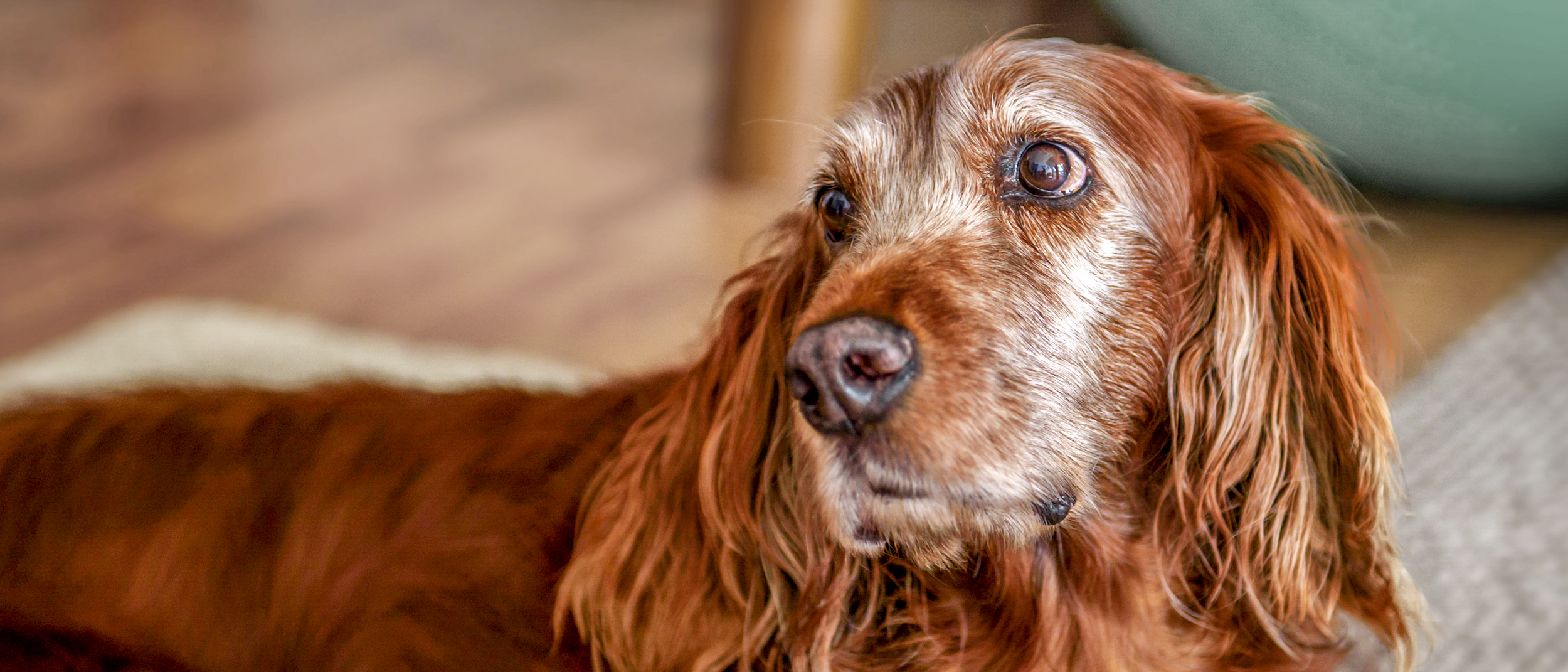
With every passing year, your dog’s body changes – and so do your pet’s nutritional requirements. Because of this, a senior dog diet that’s tailored for healthy ageing looks very different to a puppy or regular adult dog diet.
Ageing includes two distinct stages for dogs – mature and senior. Maturity refers to the mid-point of a dog’s life, when the signs of ageing are not yet visible.
Dogs are considered senior at 75%-80% of their total life expectancy. Specific nutrients can promote healthy ageing during this time.
Knowing what changes your pet’s body is going through can help you create the right routines and provide the appropriate diet for older dogs that will help keep them healthy in their golden years.
Do dogs need senior food?
Giving your dog the right lifestyle is one of the most important steps you can take towards healthy ageing. Regular physical activity helps to maintain muscle mass in older dogs and controls any tendency towards weight gain. Keeping an eye on your dog’s teeth, coat, appetite, thirst, and energy levels can also help to flag any potential health issues early so you can address them with your veterinary team.
The appropriate senior dog diet responds to your pet’s changing physical and lifestyle needs. In terms of energy requirements, nutrients for dogs should be adapted to their activity level, which depends on their age and any health sensitivities. If your dog moves around less as they age, they will use less energy. By adjusting their diet, you can help them avoid excess weight gain.
Keep in mind that reduced enthusiasm for physical exercise is a normal consequence of ageing. If your dog is slowing down, have them checked by your veterinarian – regular weighing helps to monitor their body-condition score (BCS). Medical check-ups are the best way to ensure that any age-related problems are detected at the earliest moment so that you can manage them and support your pet’s quality of life. A low-energy diet for older dogs is only necessary if your pet is overweight and if recommended by a veterinary professional.
When do dogs need senior food?
Once your dog reaches the three-quarter mark of their expected lifespan, they’re considered a senior. The ageing process happens at different times and speeds in different breeds and sizes of dog, so for small dogs, noticeable ageing could begin as late as 12 years old, while medium-size dogs are usually thought of as senior at 10 years, and for large dogs it could be around 8 years.
By adapting the diet for older dogs, the effects of ageing can be minimised, helping them to live a healthy life for as long as possible. Providing your dog with the right nutrition for their particular needs can result in the following benefits:
-
Support for their immune system
As dogs grow older, their immune system can become less effective, leaving them more susceptible to external agents . Several nutrients for dogs, including beta-carotene, vitamins C and E, and zinc, have been shown to support a healthy immune system.
-
A healthy skin and coat
The health of your dog’s skin and hair doesn’t just depend on their grooming routine. Healthy dog food for older dogs that is well-formulated can help keep their skin and coat nourished.
Borage oil has polyunsaturated omega-6 fatty acids, which have a positive effect on the sheen of the hair and the elasticity of the skin. Senior dogs’ diets should also include the right amount of zinc to help prevent dry skin and dullness of the coat.
-
Bone and joint health
Glucosamine, chondroitin sulfate, and EPA/DHA (omega 3s) are nutrients for dogs that may help to support mobility as your dog ages. Dogs with bone and joint health sensitivity have shown improved mobility when fed diets with these nutrients. Royal Canin’s Joint & Ageing Chews are designed to support the needs of senior dogs by promoting the comfort of dog joints and healthy ageing.
Every dog is wonderfully unique, and it’s important to remember that their diet should be tailored to meet their individual needs. In many cases, feeding senior dogs a tailored diet can play a role in supporting their specific health needs as they grow older.
Regular check-ups and health screens will ensure that any health problems are detected at the earliest opportunity, and your veterinarian will be able to recommend the most appropriate food for your dog.
What do senior dogs need in their diet?
Give your dog the best chance to age well with a diet that offers precise nutritional support where it’s needed. Here’s what goes into healthy dog food for older dogs, and why.
-
Adapted vitamin C and E content
Providing nutrients for dogs such as vitamin C and vitamin E is beneficial thanks to their antioxidant properties, which protect the body against the effects of oxidative stress linked to ageing.
-
High-quality protein
Senior dogs tend to lose high volumes of protein, which can lead to a condition called sarcopenia. To minimise muscle loss, a senior dog’s diet should contain high-quality, digestible protein. Highly digestible nutrients are easily absorbed into the body, supporting digestive efficiency and fecal quality and assisting muscle-mass retention.
Before changing your dog’s diet, always speak to your veterinarian and allow them to diagnose any issues, to make sure that your dog receives the right specialized or more general food.
-
Iron, copper, zinc, and manganese
These nutrients are essential for dogs of all ages, among other things helping to keep the skin and coat in good condition. Providing these nutrients as organic salts makes them easier to assimilate than mineral salts. This increases the likelihood that they will be effective in the metabolism of older dogs with less efficient digestive systems.
-
Polyunsaturated fatty acids
Soy oil, borage oil, or fish oil are used to incorporate additional polyunsaturated fatty acids into the diet. These nutrients for dogs can help to maintain the quality of the coat and support healthy joints.
-
Adapted fibre content
Adapted fibre content in your senior dog’s diet will promote a healthy gut and can help to minimise the risk of constipation, which can occur if your ageing dog is exercising less.
6. The appropriate food for dental health
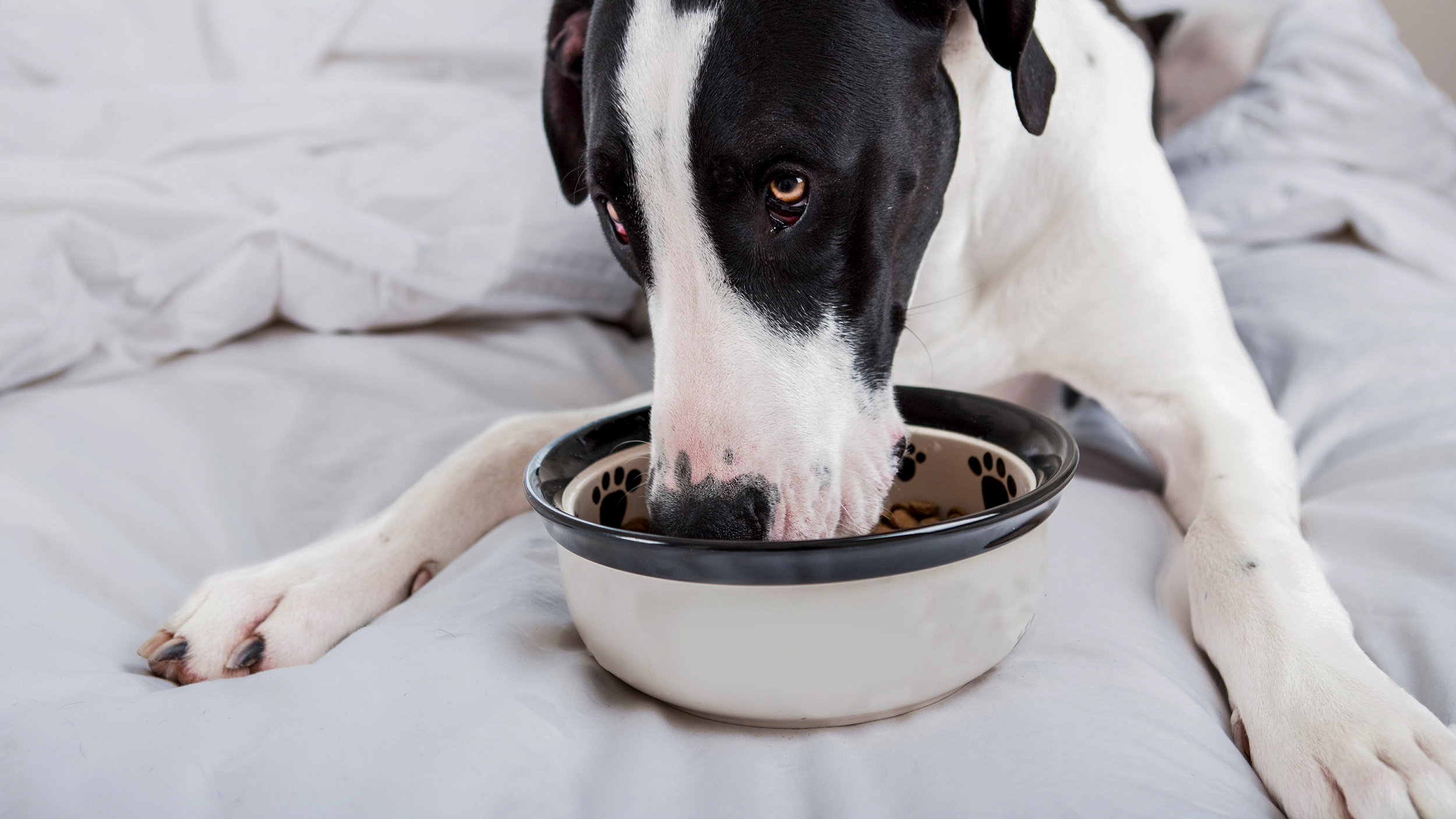
Dental problems can be common in ageing dogs, which may affect the way they eat. To make sure they continue to eat enough, think about the shape, size, and hardness of the kibble in their senior dog diet, and whether it’s time to provide them with food that’s easier and therefore more enjoyable to eat.
Changing dogs’ food
If you’re looking to switch your dog to a new senior diet, or one that’s designed to support them with a health problem, it’s important to take things slowly. If a new food is introduced too quickly, it’s not uncommon for dogs to suffer from an upset stomach, and some fussier dogs may even turn their noses up at the new food.
By changing dog food gradually, their body has a chance to adapt to the new diet and you can minimise the chance of an upset stomach.
Dr Primrose Moss, UK veterinarian, MRCVS VetMB
Related articles
Like & share this page